

datitos.app: why we build free services and what we expect from them
datitos.app brings together Z-Nexus's small free services: cartelera, ya no me llames and chancha. Why we built them and what we hope to learn from each.
By Cristiam Castillo · · 3 min read
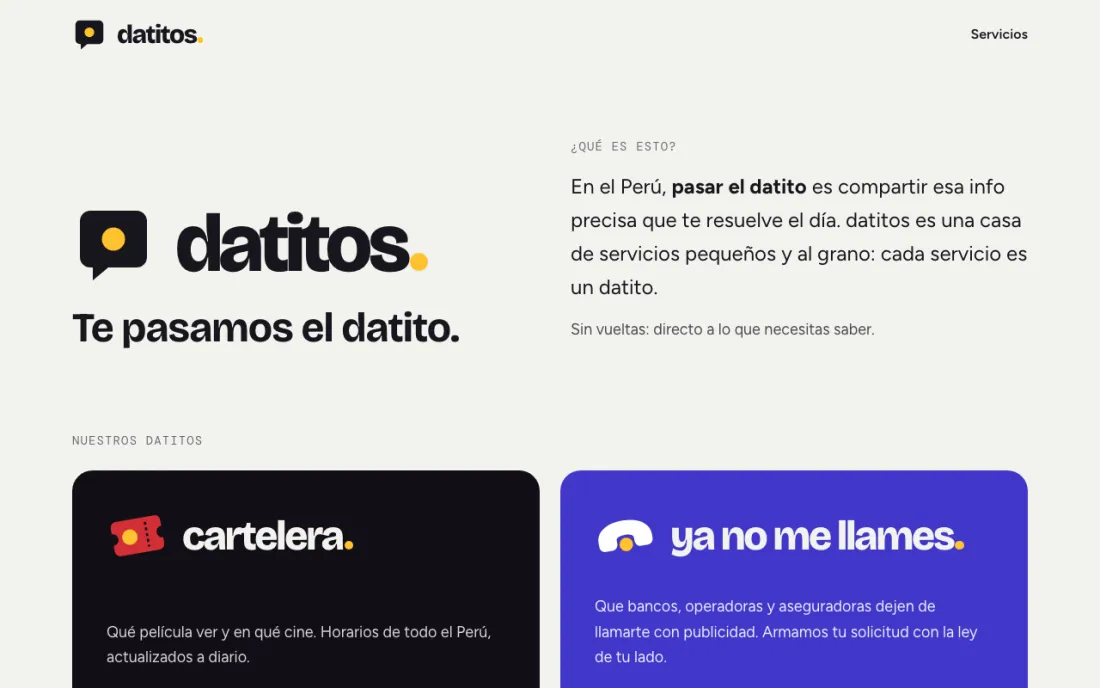
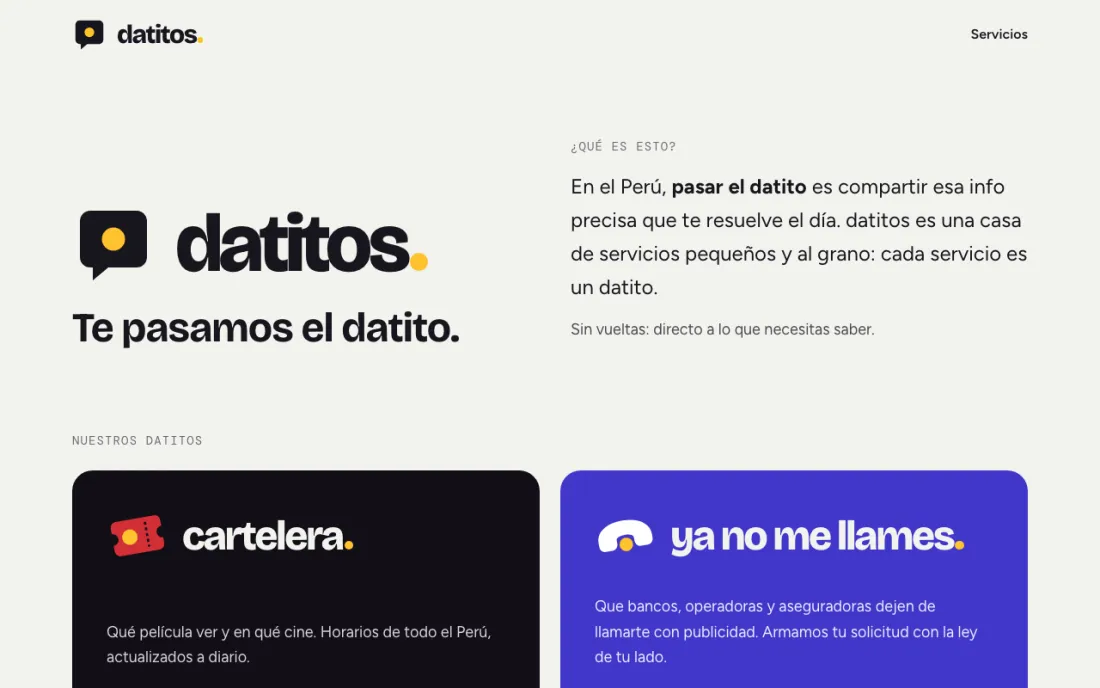
In Peru, pasar el datito means sharing that precise piece of information that sorts out your day. datitos.app is our home for small, to-the-point services: free, with no account to create, and built for an everyday problem. Each service is a datito.
Why we built them
- Because they are useful. We all have those small problems no serious product wants to solve.
- To learn fast. With AI writing code alongside us, we publish each service in days. It is the best lab to try ideas and show how we work on custom software.
- To earn trust. A software studio that gives away things that work explains itself.
- To decide with data. We measure everything in one place, with no cookies and no stored IPs, counting visits per day. What gets used, grows. What doesn't, gets shut down.
Today all three are free.
cartelera: every movie showtime
cartelera.datitos.app gathers the showtimes of the country's main chains, updated every day, to search by movie or by theater.
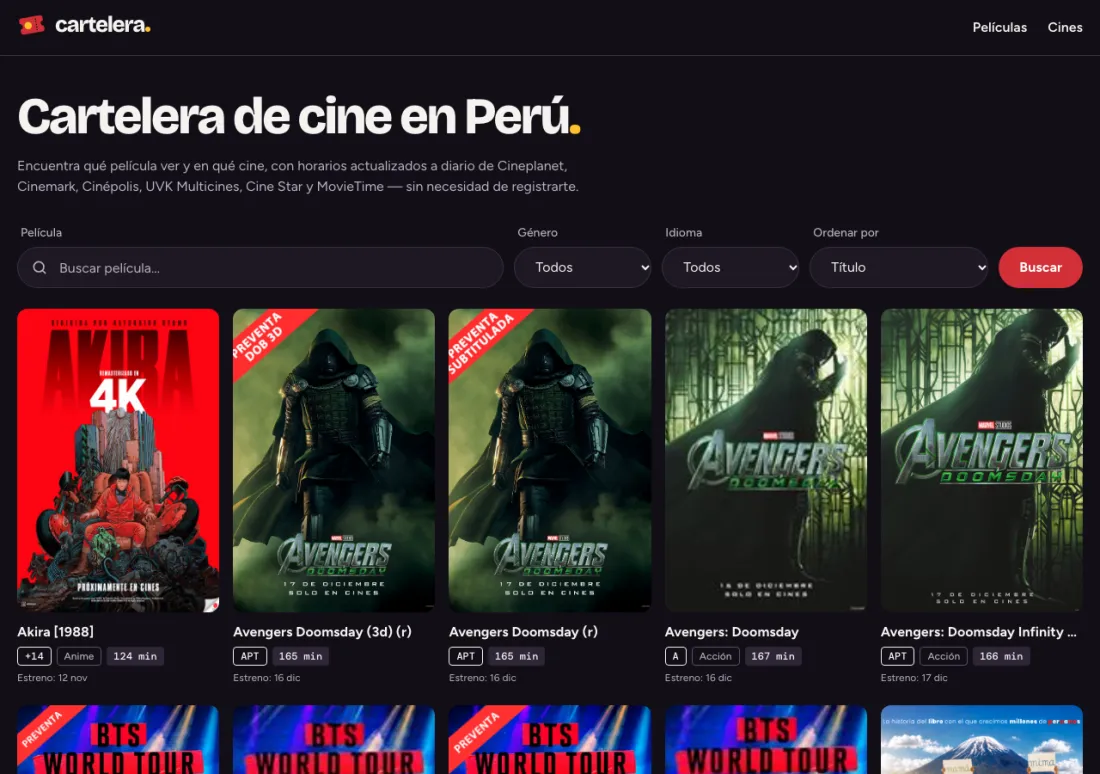
What we expect: a recurring service: whoever looks for showtimes does it every week. With it we measure whether organic searches ("movie showtimes today") are enough to sustain a service that doesn't have to persuade anyone. The technical challenge is freshness: the data is read from the chains' pages, and when they change, we have to fix things.
ya no me llames: make them stop calling you with ads
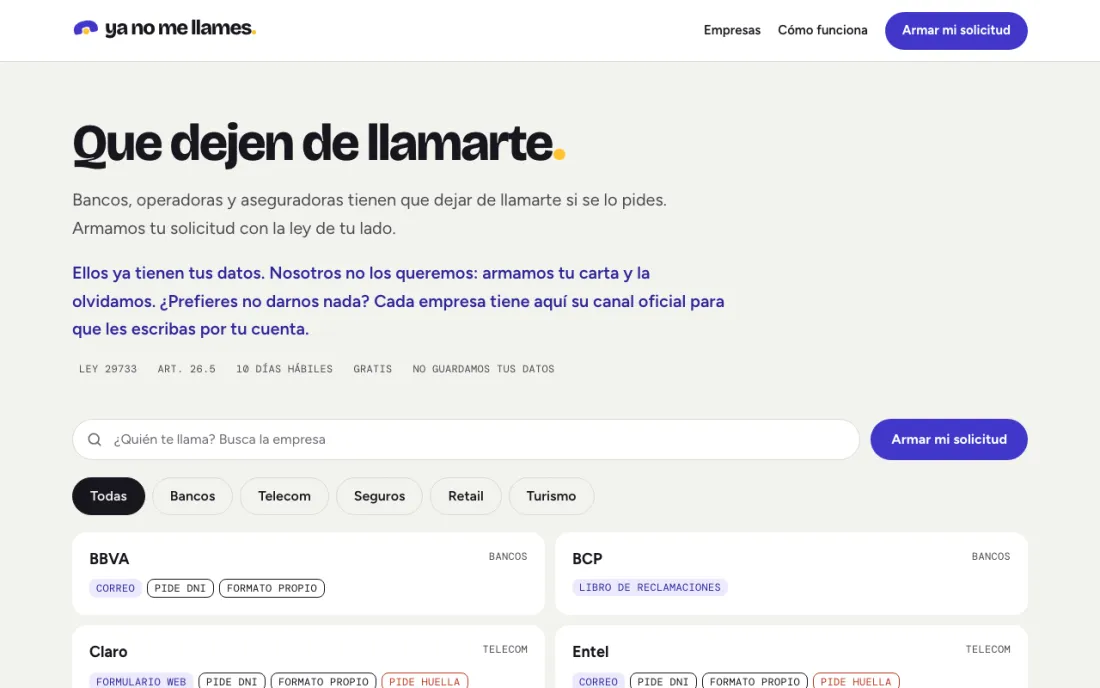
yanomellames.datitos.app helps you ask banks, telecom operators and insurers to stop calling you with advertising. We build your request with the law on your side (Law 29733 and its regulation, which require a simple, free way to opt out and a reply within 10 days) and give you the letter ready to send. If the company doesn't answer, we prepare the complaint to the authority.
What we expect:
- To validate demand. The problem is huge and frequent. We want to see how many people get as far as building their letter.
- A living catalog of each company's channels, verified by hand. It is an asset that grows and is useful in itself.
- Evidence: which companies make it hard (their own forms, demanding a fingerprint) and which reply on time. That would let us publish a ranking later.
- A second stage, if there is use: accounts, deadline tracking and automatic sending, which might be the only part with a cost.
chancha: split the bill without fighting
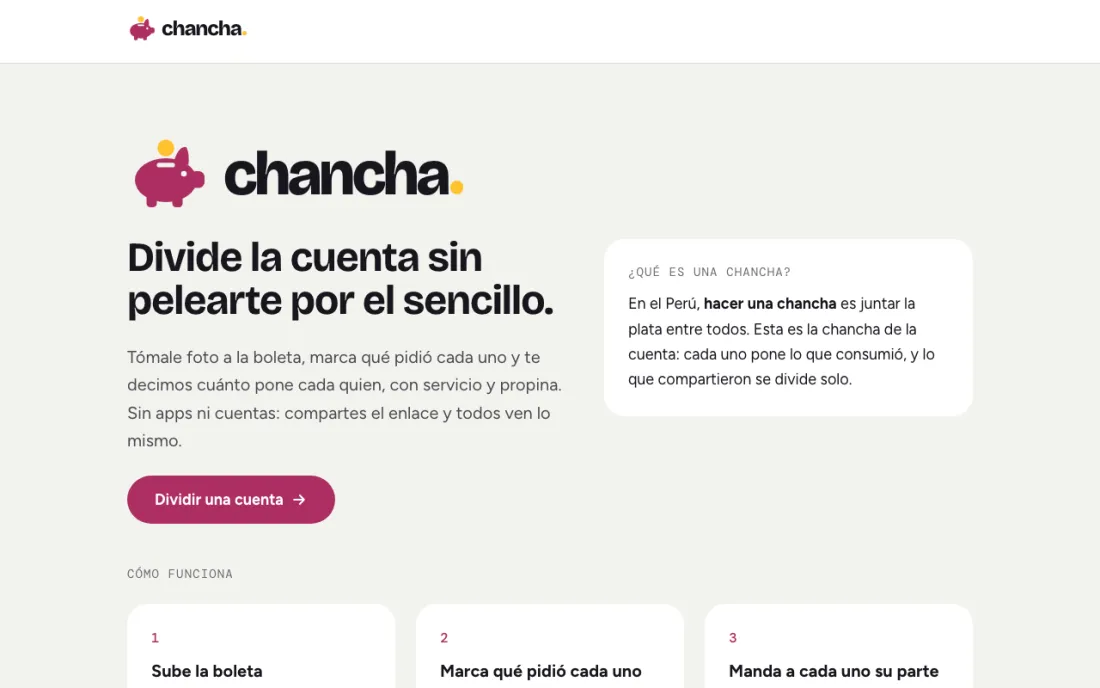
chancha.datitos.app splits the restaurant bill: you take a photo of the receipt, AI reads it, you mark who ordered what, service and tip are added, and each person gets what they owe with the payer's Yape or Plin. In Peru, hacer una chancha means pooling money among friends.
What we expect:
- Word of mouth. A shared bill reaches six people in a chat: if it works, it grows on its own.
- To learn what AI costs in a free service: we measure how many receipts the AI reads and how much it consumes, to know whether something like this is sustainable.
- A concrete example of what we do with AI in a client's product.
What's next
More datitos, each with its own shape and color, and the same yellow dot. If you have a small problem that should have a simple solution, tell us. And if yours is something bigger, see what we do in Bokea, veci or Mailerball.
Meet datitos.app
datitos.app brings together Z-Nexus's small free services: cartelera, ya no me llames and chancha. Why we built them and what we hope to learn from each.